
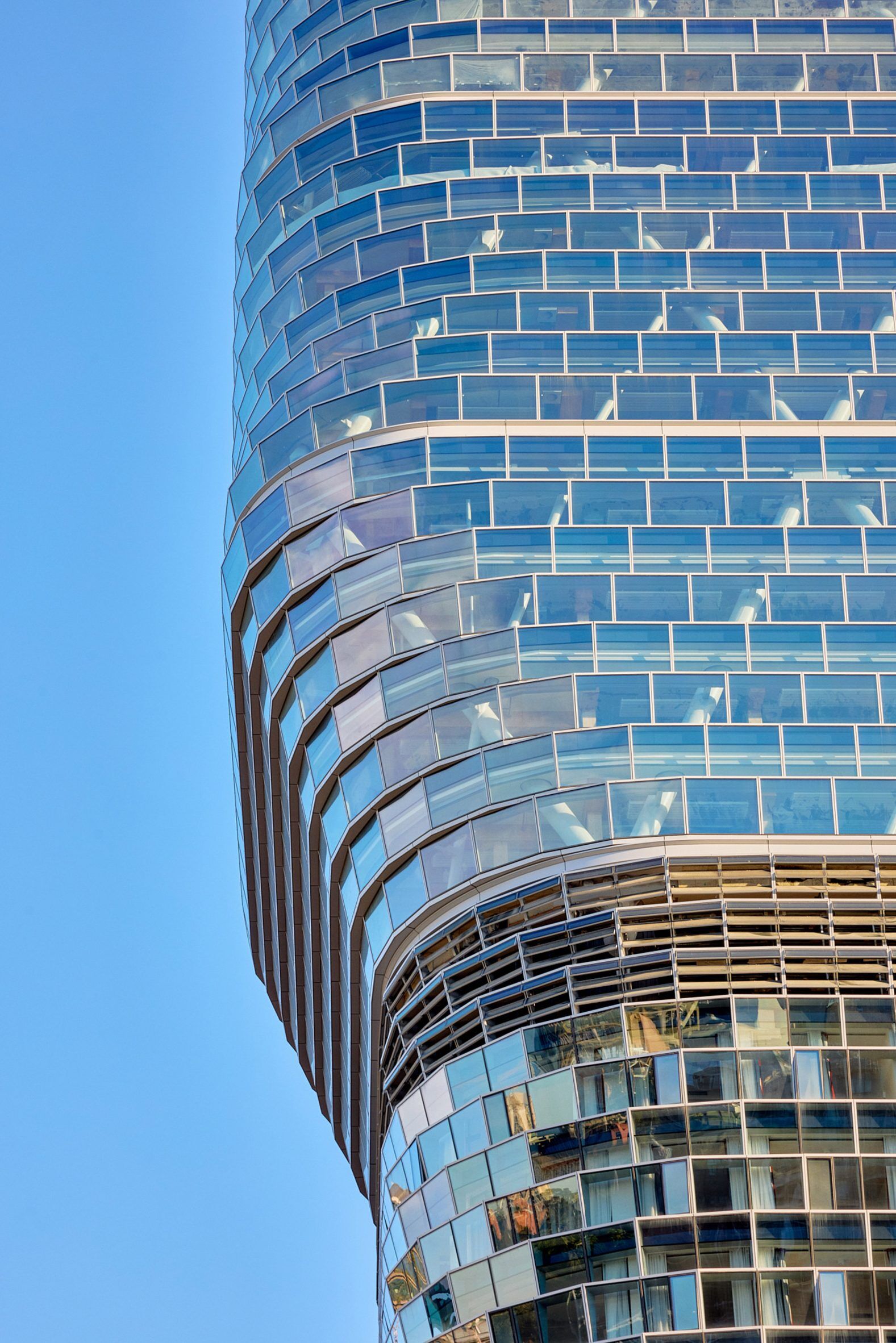
Sydney has broken a world record for the tallest hybrid timber skyscraper, Atlassian Central, which topped out in July 2026. A first-of-its kind, in terms of material innovation and sheer size, the skyscraper represents an important shift in sustainable architecture, though not without prompting its fair share of scepticism.
Standing at a proud 183 metres tall, Atlassian Central is almost 100 metres taller than the previous record-breaking building, the Ascent in Milwaukee, US. Marking a ‘moment of global significance’ for high-rise architecture, the mass timber building has raised eyebrows for its distinctive structure and become a new beacon of innovation along Sydney's skyline.
SHoP Architects & BVN Architecture designed the unique building as a permanent Sydney headquarters for the technology company Atlassian. In its completed state, it stands 39 storeys tall and features a hybrid structural system, with concrete cores supporting mass timber floors and internal structures, wrapped in a steel exoskeleton.
Architects have solved the conundrum of building high-rise structures out of timber, a material typically suitable only for lower- to mid-rise buildings. Building around a concrete lift core, with a steel exoskeleton supporting several mega floors, the design can be likened to ‘rows of 4-storey timber boxes, supported by a steel cage.’
Timber has become an increasingly popular sustainable building material for architects, with many small and medium-sized mass timber projects popping up worldwide, favoured for its carbon-reducing qualities. However, despite the normalisation of mass timber as a building material, moving from an obscure concept material to something that is being more widely recognised and implemented, it is still rare to build entirely with mass timber.
Mass timber, also known as engineered wood, refers to engineered versions of lumber that are ideal for building and were first introduced by Austrian engineers in the 1980s. Glulam timber is made by combining individual layers of dimensional timber with special waterproof adhesives, delivering the benefits of timber with the strength of steel. Similarly, CLT (Cross-laminated timber) is another subcategory of engineered wood, where boards are stacked and glued at alternating angles, giving them a strong load-bearing capacity.
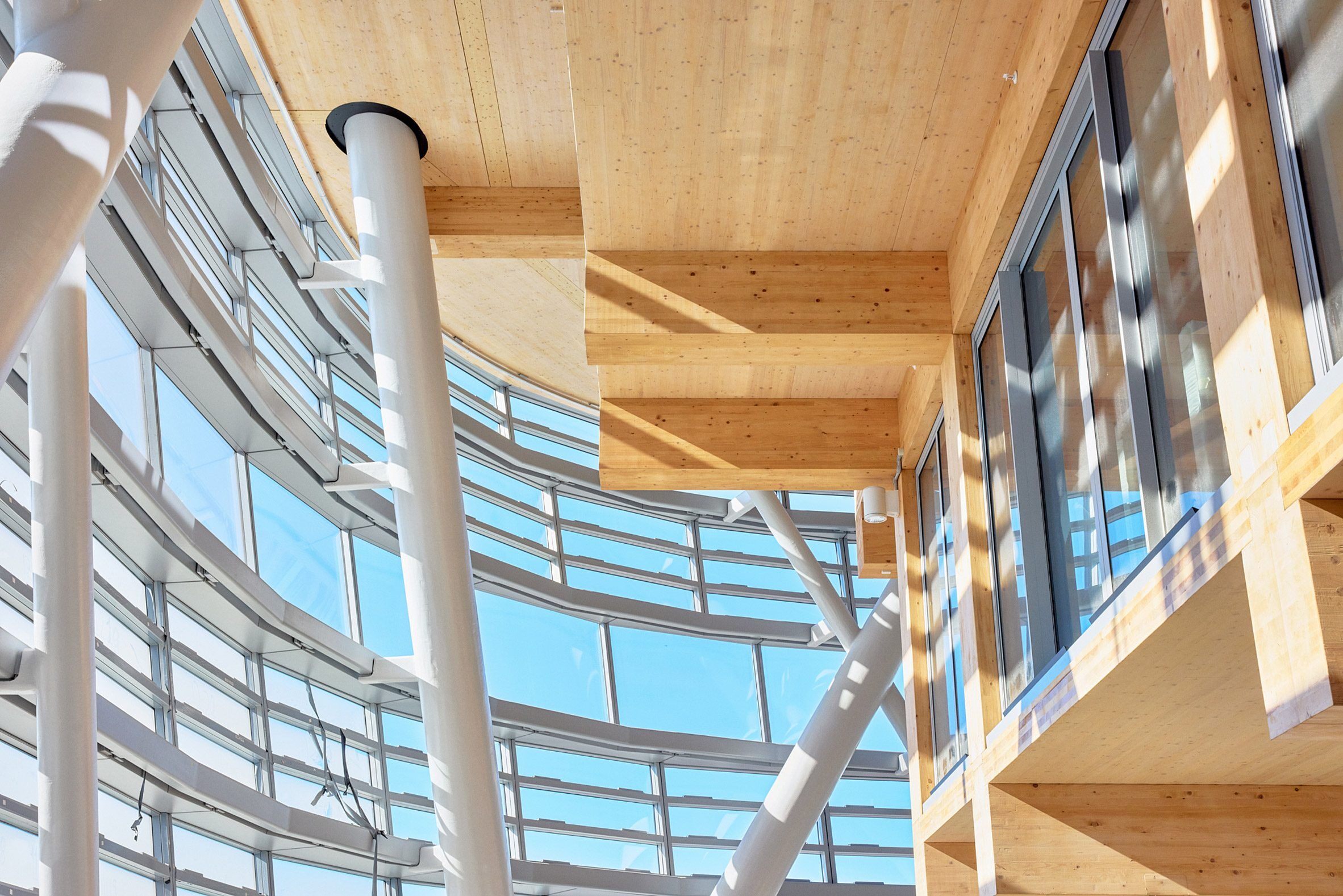
These mass timber types can replace steel beams, providing the strength and reliability of a steel structure with enhanced sustainability benefits.
The Atlassian Central skyscraper is not a pure timber structure; it uses a mix of materials, including timber, concrete, and steel reinforcements. The use of timber is more for aesthetic, structural, and sustainability purposes, rather than complete material innovation.
“We’re excited by how this concept sets a new benchmark for sustainability, where timber, landscape, and natural ventilation come together to shape a more holistic work-life experience and inspire future innovation”
- Andreia Teixeira, SHoP Architects associate principal
Building with timber reduces overall building weight and carbon footprint, while steel and concrete reinforcements ensure the building's strength and stability. Reports suggest timber reduces upfront embodied carbon by up to 73% compared to conventional steel and concrete towers.
However, building high-rise structures with mass timber does not come without cynicism.
Though wood has many advantages as a building material, it is also much lighter and weaker than other materials, presenting impracticalities in high-rise structures and limiting the amount of usable space; therefore, it is much better suited for smaller and more intricate buildings, where appropriate measures can be taken to protect the timber and mitigate risks.
Structural timber also loses some of its carbon-sequestering benefits when used in taller buildings, especially when wood is treated with chemicals to reduce combustibility and improve acoustic performance.
Despite the sustainable benefits of building with timber, high-rise structures like the Atlassian Central still require concrete cores and external reinforcements to ensure the building is safe, durable, and usable, prompting some architects to question why they would bother implementing a much more expensive and high-maintenance material in their high-rise buildings, when steel and concrete are still required.
“If we want to win the race against climate change, the construction industry is going to have to get comfortable with using more mass timber in everyday buildings. However, timber alone does have its limitations, and there are reasons why alternative, more man-made materials were developed.”
- Florence Browning, Senior Structural Engineer at Webb Yates
Constructing high-rise buildings with timber comes with technical limitations, and the question is not how timber can replace steel and concrete, but how to best harness its benefits within structural systems to balance the strengths of multiple materials while delivering the greatest sustainability outcome.
The Atlassian Central skyscraper marks a world first for hybrid timber construction, demonstrating timber's potential as a sustainable high-rise building material. However, its completion also exposes the limitations of mass timber building and the innovation that is yet to fully develop into everyday practice.

Products for High Rise Buildings
by Bimstore Curation

Timber & Wood Products
by Bimstore Curation